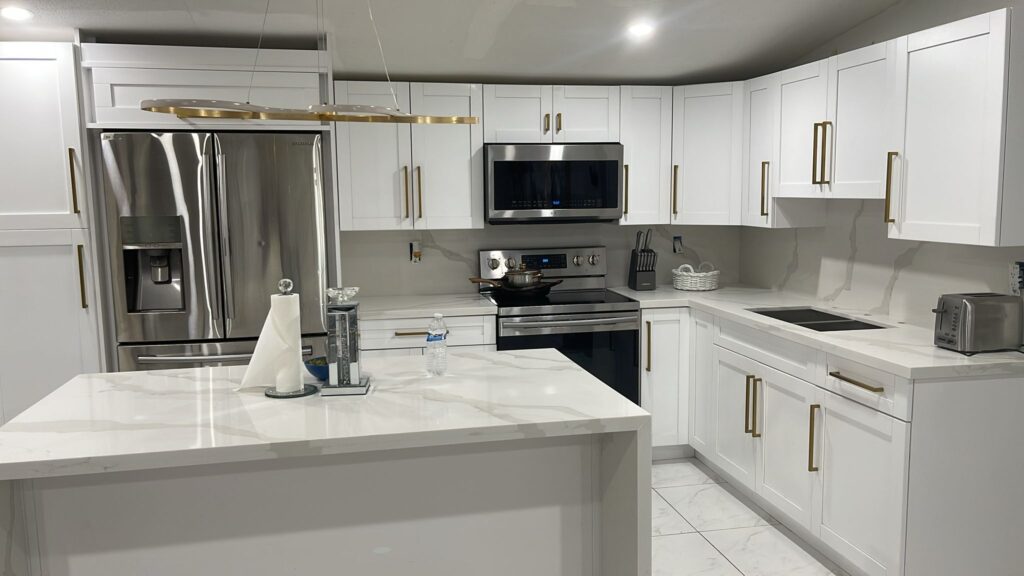
Should You Renovate Your Home or Move? How to Make the Right Decision
Your home isn’t working for you anymore. Maybe you need more space. Maybe the layout drives you crazy. Maybe everything just feels dated and tired. You’re faced with a choice that plenty of homeowners wrestle with: do you renovate the house you have, or do you sell and find something that better fits your needs?
There’s no universal right answer. The best choice depends on your specific situation, your finances, and what you actually want from your living space. Here’s how to think through it.
Start With What’s Actually Bothering You
Before comparing costs, get specific about what you’d change. Is it the kitchen layout? Not enough bathrooms? A floor plan that doesn’t flow? Lack of a home office? Write it all down. Be honest about what matters and what you could live with.
Some problems are easily solved with renovation. Outdated finishes, cramped bathrooms, and closed-off kitchens can all be transformed. Other problems are harder or impossible to fix. If you need more land, a different neighborhood, better schools, or fundamentally more square footage than your lot allows, renovation probably isn’t the answer.
The Financial Reality Check
Run the numbers honestly. On the renovation side, get realistic estimates for the work you’d want done. Include everything: construction costs, design fees, permits, temporary housing if needed, and a contingency for surprises. Add up what you’d actually spend to get the home you want.
On the moving side, calculate the full cost of relocating. That means real estate commissions on your current home, closing costs on both ends, moving expenses, and any updates or repairs the new place might need. Then look at what homes meeting your criteria actually cost in your target areas.
Don’t forget the mortgage math. If you bought your current home when rates were lower, moving means giving up that rate. A new mortgage at today’s rates could significantly increase your monthly payment even for a similarly priced home. That locked-in low rate has real value.
What You Can’t Renovate
Some things about a home are fixed. Location tops the list. You can’t renovate your commute shorter, move the house to a different school district, or change the neighborhood. If location is a significant factor in your dissatisfaction, that points toward moving.
Lot size and configuration also limit what’s possible. Adding on requires space, setbacks, and often zoning approval. A tight urban lot may not have room for the addition you’re dreaming about. Foundation and structural limitations matter too. Some homes just aren’t good candidates for major expansion.
Ceiling heights, basement situations, and basic floor plate dimensions can be difficult or impossible to change. If you crave soaring ceilings and your home has eight-foot ceilings throughout, renovation won’t give you what you want.
What Renovation Does Well
Renovation excels at transforming spaces within existing footprints. Opening up floor plans, updating kitchens and bathrooms, adding bedrooms within existing square footage, finishing basements, and modernizing systems are all solidly in renovation territory.
If you love your neighborhood, have great neighbors, and want to stay in the community, renovation lets you do that. You keep the relationships, the familiar surroundings, and the commute you know. There’s real value in staying somewhere you’ve put down roots.
Renovation also lets you customize exactly to your preferences. Buying a home means compromising. Renovating means deciding exactly what tile goes in your shower and how wide you want your kitchen island. You get the home built to your specifications, not someone else’s.
The Hidden Costs of Moving
Beyond the obvious transaction costs, moving has hidden expenses. New homes often need updates too, even newer ones. You might not love the paint colors, the landscaping might need work, or the previous owners’ taste in light fixtures might not match yours. Budget for making a new place feel like yours.
Moving also costs time and energy. Packing, coordinating logistics, changing addresses, updating registrations, finding new service providers, learning a new neighborhood. It’s exhausting. If your life is already full, that disruption matters.
The Hidden Costs of Renovating
Living through construction is stressful. Dust, noise, strangers in your home, disrupted routines, decisions that need making. Some people handle it fine. Others find it overwhelming. Know yourself and be honest about your tolerance for chaos.
Renovations frequently cost more than initial estimates. Surprises happen, scope creeps, you fall in love with more expensive finishes. Build substantial contingency into your budget and accept that the final number will likely be higher than you planned.
Questions to Ask Yourself
Do you love your location? If yes, lean toward renovating. Can the changes you want actually be accomplished in your current home? Get professional input on feasibility. What does the market look like for homes that meet your criteria? Sometimes what you want simply doesn’t exist or costs far more than renovating.
How long do you plan to stay? Renovations make more sense the longer you’ll enjoy them. If you might move in three years anyway, extensive renovation might not pencil out. What’s your financial situation? Do you have equity to tap for renovation, or would you need a new mortgage either way?
Making the Decision
Both options can lead to a home you love. The right choice comes down to your specific circumstances. Talk to a contractor about what’s possible and what it would cost. Look at available homes to understand your options in the current market. Run the financial scenarios.
Then trust your gut. Sometimes logic points one direction but your heart says something else. Both matter. You’re choosing where you’ll live your daily life. It should feel right.
Weighing a renovation? We’d be happy to walk through your home and discuss what’s possible. A conversation costs nothing and might clarify your thinking.